I Keep Misreading the Board: What Is the Best 5-Card Hand Rule?
If you keep looking at your hole cards and missing the hand everyone can see on the board, you’re not alone. The key Texas Hold’em rule is simple: at showdown, each player makes the best five-card hand possible using any combination of their two hole cards and the five community cards.
You can use both hole cards, one hole card, or neither. You do not have to use your hole cards. This is the rule behind “the board plays poker”—when the five community cards are already the best five-card hand available to every player, everyone still in the hand shares that hand and the pot is split, unless a player can make a better one with their hole cards.
Once you get used to checking the board first, then comparing each player’s best five cards, showdown hand selection becomes much less confusing. This guide covers hand rankings, kickers, https://enyenimp3indir.net/four-of-a-kind-odds-1-in-4164-and-what-kicker-means/ board-playing situations, odds, and draw chances from the flop to the river.

The Best Five-Card Hand Rule
In Hold’em, you are not ranking all seven available cards. You are selecting the strongest five-card combination from the seven you can see: your two hole cards plus the five-card board.
- You may use both hole cards and three board cards.
- You may use one hole card and four board cards.
- You may use all five board cards and no hole cards.
There is no requirement to use a hole card. That’s the detail many beginners miss. If the board is 10-J-Q-K-A, for example, every player has at least an ace-high straight using the board. A player holding pocket kings does not have three kings as their hand at showdown; their best five cards are still the board’s 10-J-Q-K-A straight.
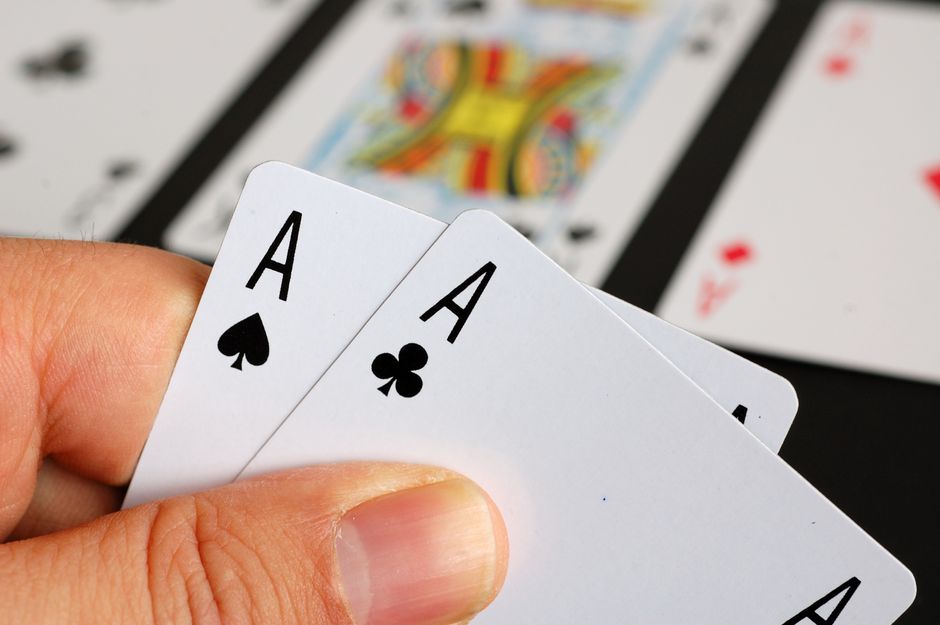
Texas Hold’em Hand Rankings
Compare hands from the top down. The first category that differs determines the winner. Within a category, compare the relevant card ranks and then kickers if needed.
Rank Hand Example 1 Royal flush A-K-Q-J-10, all the same suit 2 Straight flush 9-8-7-6-5, all the same suit 3 Four of a kind Q-Q-Q-Q-4 4 Full house J-J-J-8-8 5 Flush Five cards of one suit, not in sequence 6 Straight 8-7-6-5-4, suits can differ 7 Three of a kind 7-7-7-A-3 8 Two pair K-K-5-5-A 9 One pair 9-9-A-Q-4 10 High card A-J-8-5-2, no pair or betterA straight needs five ranks in sequence; the suits do not matter. A flush needs five cards of the same suit; they do not need to be consecutive. A hand with four hearts and a connected sequence is not a flush or a straight flush. Don’t confuse a straight draw with a flush draw: they are different draws, and their outs are counted differently.
How to Read the Board at Showdown
- Identify the board’s best five-card hand. Look for a made straight, flush, full house, or other strong combination among the community cards.
- Check what your hole cards improve. Can they make a higher pair, a better two pair, a set, a flush, or a higher straight?
- Build the best five cards for each player. Ignore any sixth or seventh card that does not make the final five.
- Compare the hand category, then the ranks and kickers. If the five-card hands are identical, the pot is split.
Kickers: The Tie-Breaker People Forget
A kicker is a card that does not form the main made hand but helps break a tie. For example, if the board is A-8-6-3-2 and one player holds A-K while another holds A-Q, both players have a pair of aces using one ace from their hand and the ace on the board. Their best five-card hands are A-A-K-8-6 and A-A-Q-8-6. The king kicker wins.
If villain has A-Q and you have A-J on that board, villain wins because the queen kicker beats the jack kicker. But if the board itself supplies the five best cards—for instance, A-K-Q-J-9 with no possible flush—your hole-card kicker may not matter. Everyone’s best hand may simply be the board, resulting in a split pot.
When the Board Plays Poker
“The board plays” means the five community cards make a hand that is Find more info at least as good as every player’s best five-card hand. You’ll see this most clearly when the board itself contains a strong combination, such as a straight or flush.
Suppose the board is 5-6-7-8-9, with no flush possible. A player holding 2-2 can use the board’s 5-6-7-8-9 straight. A player holding 10-10 can make a higher straight, 6-7-8-9-10, so that player wins. The board does not automatically mean a chop; compare each player’s best possible five cards.
On a paired board, the same careful comparison matters. If the board is K-K-7-7-2, the board’s best five cards are two pair, kings and sevens, with a deuce kicker. A player holding an ace can improve that to kings and sevens with an ace kicker, while a player holding a queen cannot. Here, the kicker matters even though both players share the same two pair from the board.
Suits never rank above other suits in standard poker. If two players make the same straight or flush in rank, the suit does not decide the winner. Compare the actual five-card hand; if it is identical, split the pot.
Hand Odds and Probabilities
Odds depend on what you are counting. A five-card poker deal has different hand frequencies from a Texas Hold’em hand where you can choose the best five cards from seven. Always check whether a chart refers to five-card hands, seven-card hands, or a particular point in a Hold’em hand.
For a standard five-card hand, the probability of four of a kind is 0.0240% (1 in 4,164)—also commonly stated as about 1 in 4,165. The tiny difference is rounding. Don’t use this figure as the probability of making quads in Hold’em from the flop; Hold’em gives you up to seven cards to form your best five, so that is a different calculation.
For practical Hold’em decisions, players more often need draw odds: the chance that one of their unseen outs arrives on the next card or by the river. “Outs” are unseen cards that appear to improve your hand to a winner. Some outs are dirty: they may improve you but still leave an opponent with a better hand.
Draw Odds From the Flop to the River
After the flop, there are 47 unseen cards. If you have nine clean outs, the chance to hit one on the turn is 9 out of 47, or about 19.1%. If you miss the turn, there are 46 unseen cards for the river, so the chance to hit one then is 9 out of 46, or about 19.6%. The chance of hitting at least one of those nine outs by the river is about 35.0%.
Draw after the flop Typical outs Hit on turn Hit by river Flush draw 9 About 19.1% About 35.0% Open-ended straight draw 8 About 17.0% About 31.5% Gutshot straight draw 4 About 8.5% About 16.5%These are approximate chances to hit at least one listed out, assuming the outs are clean and you see both remaining cards. If a flush draw has nine cards that complete it, that does not guarantee a win: an opponent may already have a full house, or a card that completes your flush may also give them a stronger hand. The same goes for straight draws. Count cards that help you, then consider whether they actually make the best hand.
A useful shortcut for quick estimates is the “rule of four and two”: multiply your outs by four after the flop to estimate the chance of hitting by the river, or by two when you have only one card to come. It is an approximation, not an exact calculation. With nine outs, it gives roughly 36% by the river and 18% for one card, close to the more exact 35.0% and 19.1% figures.
Use Cheat Sheets and Equity Charts to Practice
A good printable cheat sheet should include the hand rankings, a reminder that you can use zero, one, or two hole cards, and a simple kicker example. Keep it near your home-game table or save it beside your online poker screen. A compact chart is especially useful while you are learning to build the best five-card hand instead of automatically including both hole cards.
Equity charts can help with the next question: how often does your hand win against an opponent’s likely range? Hand odds tell you the chance of making a draw; equity estimates your share of the pot against other hands. They are related, but not interchangeable. A nine-out flush draw may hit about 35% by the river, but your total equity depends on the opponent’s hand, possible redraws, and whether your outs are clean.
When reviewing a hand, write down the board, both players’ hole cards, and each player’s best five cards. Then check the hand ranking and kicker. That quick routine catches most showdown mistakes.
A Simple Showdown Checklist
- Start with the five community cards, not your hole cards.
- Ask what the board itself makes: a pair, straight, flush, or better?
- Construct each player’s best five-card hand from all seven available cards.
- Compare the hand category, then the key ranks and kickers.
- Remember that suits have no ranking and that a draw is not a made hand.
- If the best five cards are identical, the pot is split.
The best five-card hand rule is the foundation of Texas Hold’em showdown hand selection: choose the strongest five cards available, whether they come from your hand, the board, or both. Read the board first, call out the kicker when it matters, and use printable cheat sheets or equity charts as practice aids—not as substitutes for comparing the actual five cards.