What Are the Most Common Failure Points in Live Dealer Streaming?
Live dealer streaming has become the cornerstone of online casino apps and mobile websites, delivering a real-time gaming experience that mimics the excitement of a physical casino floor. But behind the seamless interface enjoyed by players lies a complex chain of technology susceptible to a range of failure points. Understanding these vulnerabilities is essential for operators and engineers alike to build resilient streaming systems that can handle the high stakes of 24/7 live production.
The Landscape of Live Dealer Streaming
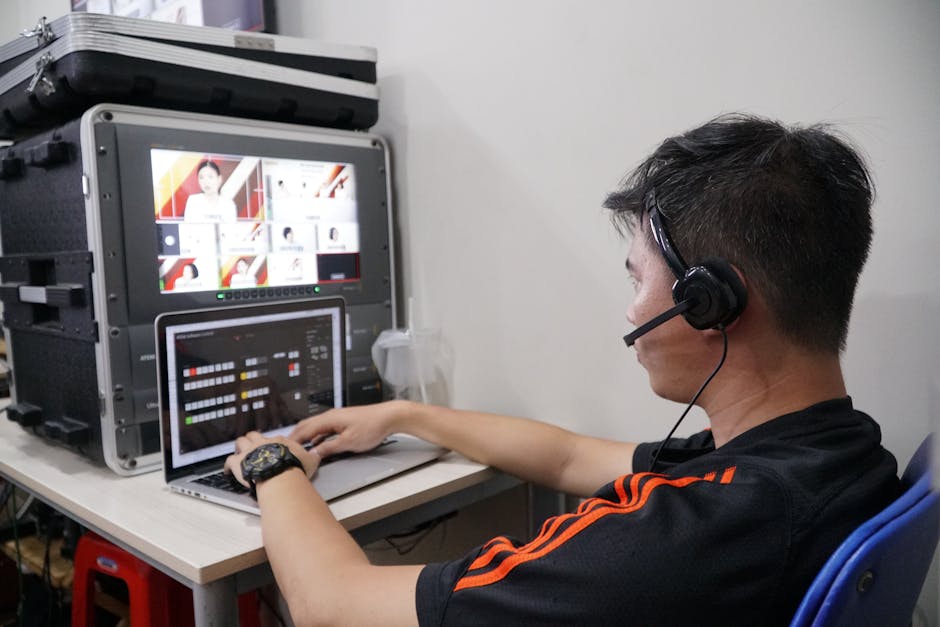
At its core, live dealer streaming involves capturing multi-camera feeds from a studio environment, encoding these feeds into a compressed video format, and delivering them with minimal latency to varied devices—especially smartphones and tablets. The operational complexity increases when you factor in lighting, visual consistency, and the demand for a mobile-first experience.
Companies like MRQ have pioneered adaptive streaming solutions tailored to these challenges, while hardware reviews from outfits such as Hardware Times offer insights into the robustness of encoders and networking gear. Meanwhile, standards recommended by the Society of Motion Picture and Television Engineers (SMPTE) provide frameworks to optimize synchronization and visual quality throughout the pipeline.
Common Failure Points in Live Dealer Streaming
From studio tech to the user’s mobile device, here are the principal failure points that can disrupt live dealer streams:
- Overheating Gear
- Dropped Network Links
- Encoder Overload
- Lighting and Visual Inconsistencies
- Mobile-First Streaming Constraints
1. Overheating Gear: The Hidden Time Bomb
Live dealer studios typically run multi-camera setups with professional-grade lighting and encoding equipment operating continuously for hours on end. However, one often overlooked reliability threat is overheating. What happens when this box overheats at hour 9? The result can be sudden shutdowns or degraded performance leading to dropped frames and poor stream quality.
Studio encoders and switchers generate substantial heat, especially when compressing multiple HD video feeds simultaneously. Equipment racks must have adequate airflow and environmental controls. According to analysis by Hardware Times, many encoder failures stem from insufficient cooling rather than component defects.
Mitigation Tips:
- Install dedicated HVAC or cooling fans in the rig room.
- Monitor internal temperatures with inline sensors and trigger automated alerts.
- Keep spare hardware hot-swappable to minimize downtime.
2. Dropped Network Links: The Streaming Killers
Network reliability is paramount for live dealer streaming. Dropped network links can cause buffering, stream freezes, or complete disconnection. The live feed’s low-latency nature—necessary to maintain real-time interactivity on online casino apps—exacerbates vulnerability to packet loss and jitter.
Multi-path networking utilizing bonded internet connections, such as aggregating LTE and fiber, is common practice. However, as MRQ points out, edge cases like ISP failover delays or sudden congestion spikes may still disrupt streams.
Mitigation Tips:
- Implement real-time network monitoring and adaptive bitrate streaming protocols.
- Use redundancy with multiple ISPs and failover routing to reduce single points of failure.
- Employ forward error correction (FEC) to mitigate packet loss impact.
3. Encoder Overload: The CPU/GPU Bottleneck
Encoding multiple HD or UHD streams simultaneously, applying overlays, and preparing low-latency feeds require significant compute resources. Encoder overload occurs when CPU/GPU limits are exceeded, causing lag, dropped frames, or quality degradation.
Due to the mobile-first user base of many casino platforms, streams must often be transcoded to diverse resolutions and bitrates. Equipment benchmarking, like those found on Hardware Times, echoes that pushing hardware beyond recommended limits invites encoder instability.
Mitigation Tips:
- Choose encoders sized for peak processing loads, not just average output.
- Regularly profile streaming workflows to identify bottlenecks.
- Employ hardware acceleration where possible to offload CPU and reduce latency.
4. Lighting and Visual Consistency: Keeping the Look Professional
In multi-camera studio production, maintaining consistent lighting and color balance is challenging but critical. Sudden shifts in illumination or inconsistent camera positioning can cause distracting flicker or mismatched streams—ruining the polished feel essential to high-end live dealer presentations.
The Society of Motion Picture and Television Engineers (SMPTE) standards suggest best practices for color grading and camera synchronization to mitigate these issues. Unfortunately, studios occasionally ignore this, leading to viewer complaints, especially on large mobile screens where lighting flaws are more noticeable.
Mitigation Tips:
- Use controlled lighting rigs with calibrated fixtures tuned for uniformity.
- Employ waveform monitors and vectorscopes adhering to SMPTE guidelines.
- Schedule periodic visual checks and calibration between sessions.
5. Mobile-First Streaming Constraints: Bandwidth and Latency Challenges
Online casino apps and mobile websites must deliver crisp, low-latency streams optimized for cellular networks. The broad variance in mobile device capabilities and network conditions forces compression tradeoffs that can invite quality loss or sync issues.
Adaptive streaming technologies are essential here, but operators must balance bitrate reduction against the risk of encoder overload and buffering. MRQ’s streaming frameworks focus on intelligent codec tuning to align with low-power device constraints without sacrificing interactivity.
Mitigation Tips:
- Implement multi-variant streaming profiles automatically adjusted per device and network.
- Continually monitor end-to-end latency and adjust encoding/rendering pipelines accordingly.
- Conduct frequent real-world tests on diverse mobile platforms to catch issues early.
Summary Table: Common Failures vs. Mitigations
Failure Point Cause Impact Mitigation Strategies Overheating Gear Insufficient cooling during long sessions Equipment shutdown, frame drops Enhanced cooling, temperature monitoring, hot spares Dropped Network Links ISP downtime, packet loss, congestion spikes Buffering, stream freezes, disconnections Redundancy, adaptive bitrate, error correction Encoder Overload Excess CPU/GPU load from multi-feed & transcoding Lag, dropped frames, degraded video Right-sized hardware, hardware accel, profiling Lighting & Visual Inconsistencies Variable rig setups, lack of calibration Flicker, color mismatch, reduced professionalism Calibrated rigs, SMPTE tools, periodic checks Mobile-First Constraints Variable device/network conditions, compression tradeoffs Latency, quality loss, sync issues Adaptive streaming, real-time monitoring, testingFinal Thoughts
Live dealer streaming is a complex ocr for playing cards dance of cameras, lighting, encoding, and distribution—not to mention the constraints of delivering a superior mobile experience. The most common failure points—overheating gear, dropped network links, and encoder overload—can often be traced back to insufficient planning or operational oversight. Lighting inconsistencies and mobile-first constraints add additional layers of challenge but also opportunity for optimization.
Vendors like MRQ lead the charge by innovating adaptive streaming protocols tailored for low-latency environments, while insights from Hardware Times inform hardware selection under real-world stress. Adhering to industry standards from SMPTE further underpins a professional-grade output.
For operators running live dealer studios, the mantra should be comprehensive monitoring coupled with proactive maintenance: What happens if gear overheats at hour 9? How quickly can network failover triggers? Keeping those questions top of mind—and building systems designed to handle these scenarios—ensures that live dealer streams stay robust, engaging, and profitable.